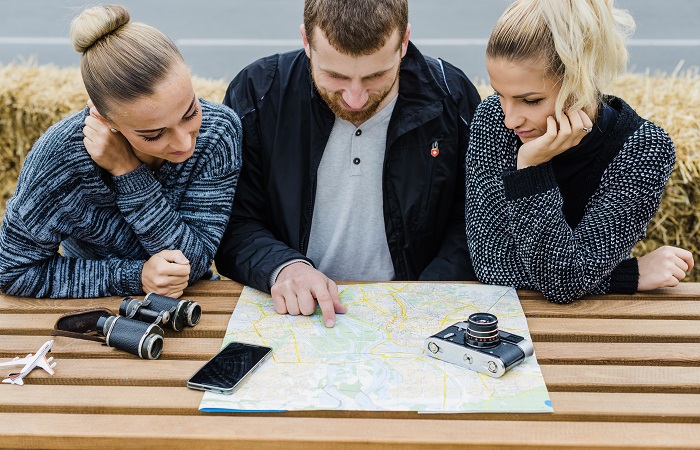
Popular tourist attractions are usually the first places travelers add to their travel plans, but they only show one side of a destination. Local streets, neighborhood cafés, community spaces, small markets, and natural scenery often reveal the true character of a city or region more clearly.
Map Guide TTweakMaps From TravelTweaks helps travelers move beyond famous attractions and discover local and lesser-known places nearby. By examining streets, public spaces, businesses, natural features, and surrounding locations on the map, travelers can identify areas that best match their interests, available time, and comfort level.
With the help of TTweakMaps, TravelTweaks makes it easier to understand a destination’s surroundings and plan a more enjoyable and meaningful journey.
What Does It Mean to Explore Beyond the Usual Tourist Map?
Exploring beyond the usual tourist map does not mean avoiding famous attractions. It means using a major landmark as a starting point and looking at the local streets, parks, markets, and public spaces around it on the map.
- Zoom in on the area surrounding a famous attraction to identify nearby streets and public spaces.
- Check whether there is a park, market, library, public square, or cultural building nearby.
- Review the walking route between two major attractions and save useful stops along the way.
- Compare the street pattern of a tourist district with a nearby residential area.
- Use distance and accessibility information to select only practical places.
- Check current information and confirm your return route before visiting an unfamiliar or isolated area.
This allows travelers to enjoy famous attractions while also gaining a better understanding of the destination’s real environment.
How Map Guide TTweakMaps From TravelTweaks Reveals the Character of a Neighborhood
TTweakMaps helps travelers understand useful details about a neighborhood before visiting it. By looking at the street layout, public spaces, local businesses, cultural buildings, and natural surroundings, travelers can get an idea of whether an area is lively, peaceful, commercial, historic, or mainly residential.
For example, an area with small public squares, independent cafés, schools, libraries, and community centers may feel very different from a tourist district filled with large hotels and souvenir shops. The map helps travelers compare these areas and decide which neighborhood best matches their interests in food, culture, photography, relaxation, or everyday city life.
Exploring the Areas Between Famous Landmarks
The area between two famous landmarks is often seen as nothing more than a travel route. However, carefully examining these connecting areas on the map can help travelers identify several small but meaningful places.
- Look for pedestrian streets, gardens, courtyards, and riverside paths along the walking route.
- Save small museums, galleries, or historic buildings located between major landmarks.
- Check whether the route is direct, crowded, hilly, or difficult to follow.
- Notice where a busy commercial area ends and a quieter neighborhood begins.
- Do not add every visible place to your itinerary; choose stops according to their distance and relevance.
- Save an alternative route in advance in case of road closures or limited access.
With this approach, the map becomes more than a tool for directions. It also helps travelers understand how different parts of a city are connected.
How to Identify Local Streets, Community Areas, and Everyday Experiences
Everyday local places are not always marked as major tourist attractions. By observing clusters of local shops, public facilities, and community spaces on the map, travelers can identify areas where normal local life is more visible.
- Look for streets where bakeries, cafés, pharmacies, bookstores, and small restaurants are located close together.
- Check the areas around libraries, parks, community centers, and places of worship.
- Identify public squares where several neighborhood streets meet.
- Notice whether businesses are spread throughout the area or concentrated along one tourist street.
- Check recent reviews and opening information, but do not rely only on ratings.
- Respect noise levels, photography rules, and local privacy when visiting residential areas.
These map patterns provide a useful indication of local activity and help travelers make informed decisions instead of choosing random streets.
Using Map Patterns to Build a Local Food and Culture Trail
A useful food and culture trail should include places located within the same neighborhood that work together to create a clear experience. Map Guide TTweakMaps From TravelTweaks helps travelers identify nearby clusters of food, art, history, and community activity so that they do not include widely separated, random places in a single day.
- Use a museum, historic building, art gallery, or cultural center as your starting point.
- Look on the map for a traditional restaurant, bakery, or local café nearby.
- Add a nearby market, craft shop, bookstore, or regional product store.
- Compare the distance and walking time between each stop.
- Check the opening hours and weekly closing days of small businesses.
- Keep the trail short enough to enjoy each place without rushing.
In this way, the map helps travelers plan food and culture as one connected neighborhood experience rather than as separate locations.
How Maps Can Help You Understand a Destination’s Natural Landscape
Rivers, coastlines, hills, valleys, forests, and green spaces shape the structure of a destination. Looking at bridges, waterfronts, trails, and crossing points on the map helps travelers understand how accessible a place really is.
A location may appear close on the map, but reaching it may require climbing a steep slope, using stairs, crossing a bridge, or passing through a limited crossing point. A riverside area may have a long walking path but few exit points, while reaching a hilltop viewpoint may require more time and energy.
Reviewing these details in advance helps travelers choose a realistic route based on their fitness level, the weather, and the time available.
Finding Quiet Alternatives to Busy Tourist Districts
Popular tourist districts can become very crowded during peak season. A map can help travelers identify quieter alternatives nearby, but these places should still be accessible, active, and suitable for visitors.
- Look for smaller museums, parks, promenades, and neighborhood squares around the main tourist area.
- Identify other clusters of cafés and cultural places nearby.
- Visit a famous attraction in the morning and explore a peaceful nearby area afterward.
- Choose locations with active businesses, public facilities, and clear access points.
- Check public transportation stops and your return route in advance.
- Do not confuse a quiet place with an isolated one; always confirm local activity and safety information.
The map helps travelers move away from crowded areas while still choosing options that are connected and practical.
How to Recognize Places That Match Your Personal Travel Interests
The same type of map is not equally useful for every traveler. When using Map Guide TTweakMaps From TravelTweaks, it is more helpful to select two or three main interests instead of saving every online recommendation.
- Architecture enthusiasts can connect old streets, bridges, monuments, and notable buildings.
- Food travelers can identify clusters of bakeries, markets, and regional restaurants.
- Families can prioritize parks, open spaces, rest areas, and shorter walking routes.
- Nature lovers can identify waterfronts, gardens, trails, and viewpoints.
- Cultural travelers can group museums, galleries, theaters, and community art spaces.
- Photography enthusiasts can compare street patterns, open squares, and scenic angles on the map.
Personal filters make the map more focused and provide a clear reason for including each selected place in the itinerary.
Making Small Map Discoveries Meaningful
Small places discovered on a map can help travelers understand a destination’s history, culture, and local life. A public mural, an old street, a small garden, or a local square may provide useful information about the area’s past and everyday character.
Travelers should not simply save locations to complete a list. Reading local signs, observing building styles, and understanding the purpose of public spaces can make even a simple stop more memorable. In this way, a small discovery on the map can become a meaningful part of the trip.
How to Explore Lesser-Known Areas Without Losing Travel Confidence
Exploring lesser-known areas should be organized and comfortable. Checking the area’s location, nearby public transportation, active streets, and return route on the map can give travelers greater confidence.
Before leaving, confirm suitable visiting hours, local guidance, and accessibility information. Do not assume that every quiet street is a tourist attraction. Some spaces may be residential, private, culturally sensitive, or temporarily closed. Responsible exploration also means understanding when it is better to observe a place from a distance and when another location should be selected.
Final Thoughts
Map Guide TTweakMaps From TravelTweaks should not be viewed only as a map for finding hidden places. It is a practical travel approach that helps travelers understand neighborhood patterns, natural landscapes, cultural spaces, and personal interests alongside famous attractions.
A good travel experience is not created simply by visiting more places. By exploring local streets, small markets, and quiet parks, travelers can understand a destination in a more authentic and meaningful way.