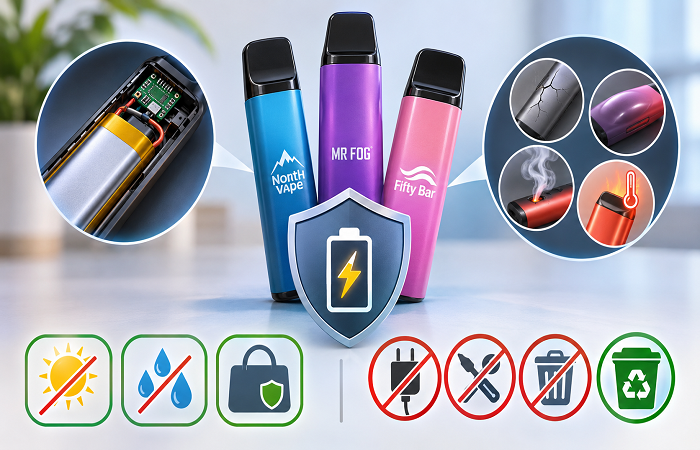
Small electronic devices are easy to carry, but their compact size can make it easy to overlook what is happening inside them. A device that fits in a pocket may contain a lithium-ion battery, electronic circuits, and other components that require careful handling. If the battery is damaged, exposed to excessive heat, or used incorrectly, it can become a safety concern.
Understanding battery safety is therefore an important part of learning about disposable vape devices. Whether researching North Vape flavors, Mr Fog vapes, or Fifty Bar Vapes, consumers should look beyond product appearance and pay attention to battery information, storage instructions, and disposal guidance. A few practical precautions can help reduce avoidable risks.
Why Disposable Vape Battery Safety Matters
Most modern electronic devices rely on batteries to provide portable power. Lithium-ion batteries are widely used because they can store energy in a relatively small space. However, they can also pose risks if damaged, overheated, improperly charged, or manufactured incorrectly.
Disposable vape devices may look simple from the outside, but their internal batteries still need appropriate protection. A battery fault can lead to overheating, fire, or, in some cases, an explosion. These risks make it important to understand the basic warning signs and follow the manufacturer’s instructions.
1. Understand the Battery Inside the Device
A battery supplies the electrical energy needed to operate a device’s electronic components. In a vaping device, that energy powers the heating system and any associated controls or indicators.
Battery specifications can vary between models. Some devices are designed for single-use disposal, while others include rechargeable batteries and charging connections. Consumers should never assume that every device can be charged simply because it has a familiar shape or similar features.
When researching products associated with Mr Fog vapes, check the documentation for the exact model rather than relying on general brand descriptions.
Important details include:
- Whether the device is rechargeable.
- The battery specifications provided by the manufacturer.
- Any charging requirements and restrictions.
- Instructions for identifying damage or abnormal operation.
- Guidance for safe storage and end-of-life disposal.
Never attempt to recharge a disposable device unless the manufacturer explicitly designed it for recharging. Do not modify the battery, open the casing, or attempt to replace internal electrical components yourself.
2. Recognize Battery Damage and Warning Signs
Battery problems are not always obvious at first. Sometimes, a device may show visible damage after being dropped or crushed. In other cases, it may become unusually hot or behave differently from normal.
Recognizing these warning signs matters because continuing to use a damaged device can increase the risk of injury or fire.
Watch for signs such as:
- Unusual or excessive heat.
- A swollen, cracked, or distorted casing.
- Liquid leakage or visible internal damage.
- Burning smells, smoke, or unusual sounds.
- Unexpected electrical behavior.
If a device becomes unusually hot, starts swelling, or produces smoke, stop using it and do not attempt to charge it. Do not handle a smoking or actively overheating device. Move away, keep others clear, and contact local emergency services if there is an immediate fire or safety threat.
A damaged device should not be opened or repaired at home. Follow the manufacturer’s instructions and appropriate local guidance for safe handling.
Practical Habits for Safer Storage, Charging, and Disposal
Battery safety depends on more than the quality of the battery itself. Storage conditions, charging practices, physical handling, and disposal also influence the risks associated with electronic products.
Portable devices often travel in bags, pockets, or vehicles, where they may encounter heat, pressure, or accidental impacts. Simple habits can help prevent damage before it occurs.
3. Store and Handle Devices Properly
Excessive heat can affect lithium-ion batteries, while crushing or puncturing a battery can damage its internal structure. For this reason, storage conditions deserve attention even when a device is not being used.
Keep devices away from direct sunlight and sources of heat. Avoid leaving them in hot vehicles, placing heavy objects on them, or storing them where they may be crushed.
These precautions apply when handling products associated with Fifty Bar Vapes and other compact electronic devices.
Practical storage habits include:
- Keeping devices away from children and pets.
- Avoiding exposure to water, moisture, and extreme temperatures.
- Protecting devices from drops and crushing.
- Keeping batteries away from loose metal objects where practical.
- Following the manufacturer’s storage instructions.
If e-liquid leaks from a device, avoid direct contact with the liquid and wash exposed skin promptly with soap and water. Nicotine-containing liquid can be harmful if swallowed or absorbed through the skin, so keep it away from children and pets.
4. Follow Charging and Disposal Instructions
Charging safety is especially important for products designed to be rechargeable. Use only the charging equipment and methods recommended by the manufacturer. Do not charge a device that is visibly damaged, leaking, or unusually hot.
Avoid charging rechargeable devices on soft surfaces where heat may build up, and do not leave them charging in conditions prohibited by the manufacturer. Disconnect the device according to its instructions, and stop using it if charging produces unusual heat, odors, or other warning signs.
Consumers researching North Vape flavors should remember that flavor names and product descriptions do not provide evidence about battery quality or safety. Battery instructions and technical information should be checked separately.
Disposal is another important consideration. Disposable vape devices can contain lithium-ion batteries and electronic components that may start fires if damaged or crushed in ordinary waste collection systems.
Instead of placing them in household rubbish or recycling bins unless local guidance specifically permits it, use an appropriate battery or electronic-waste collection service. Do not puncture, dismantle, or burn the device. If it is damaged, contact the relevant local waste service for handling instructions.
Final Thoughts
Disposable vape battery safety starts with understanding the device, recognizing warning signs, and following the manufacturer’s instructions. Proper storage, careful handling, appropriate charging practices, and responsible disposal can help reduce avoidable risks.
When researching North Vape flavors, Mr Fog vapes, or Fifty Bar Vapes, review the specific model’s battery information rather than assuming all products share the same design. Brand names and flavor descriptions cannot establish whether a battery is safe or whether a device has been tested appropriately.
Ultimately, compact electronics still require careful handling. Treating battery warnings seriously, avoiding unauthorized modifications, and disposing of devices through suitable collection services are practical steps that help protect people, property, and the environment. Nicotine-containing vaping products are addictive and are not risk-free; people who do not use tobacco or nicotine should not start, and young people should avoid them.